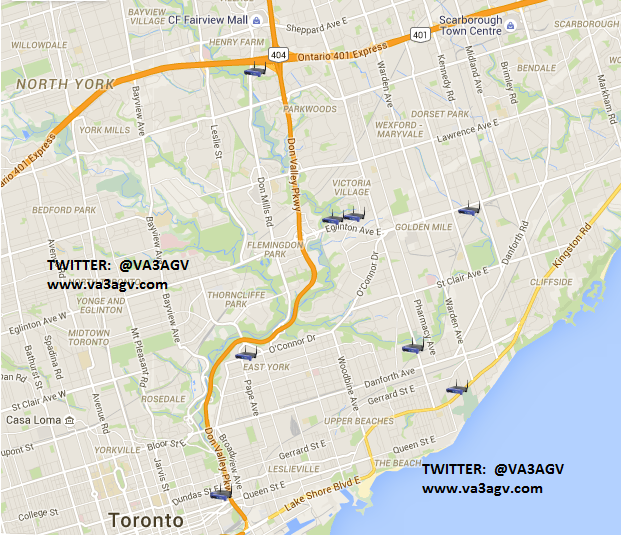
East Toronto Canada
Amateur HAM Radio MESH - HSMM-MESH or Broadband-Hamnet - High-speed multimedia radio (HSMM)
Showing posts with label HSMM-MESH Wireless Network TORONTO CANADA. Show all posts
AREDN Project
AREDN Project - Amateur Radio Emergency Data Network
BTW: you may want to look at the AREDN group if you plan on doing anything with Ubiquiti gear as that is where all the BBHN developers have move to and are no longer developing the BBHN firmware. Channel -2 support for example is in the latest beta but Linksys gear can't handle it.
Formation
The AREDN Development Team was formed February of 2015 by former members of the BBHNDev team interested in making mesh software work for the needs of Amateur Radio Operators and emergency networks. The AREDN™ work is based on the experiences and skills gained working on the BBHNDev team.
Group Mission
To provide the Amateur Radio Community with a quality solution for supporting the needs of high speed data in the Amateur Radio and Emergency Communications field.
http://www.aredn.org/about-us
http://hsmm-meshubiquiti.blogspot.com/
BTW: you may want to look at the AREDN group if you plan on doing anything with Ubiquiti gear as that is where all the BBHN developers have move to and are no longer developing the BBHN firmware. Channel -2 support for example is in the latest beta but Linksys gear can't handle it.
Formation
The AREDN Development Team was formed February of 2015 by former members of the BBHNDev team interested in making mesh software work for the needs of Amateur Radio Operators and emergency networks. The AREDN™ work is based on the experiences and skills gained working on the BBHNDev team.
Group Mission
To provide the Amateur Radio Community with a quality solution for supporting the needs of high speed data in the Amateur Radio and Emergency Communications field.
http://www.aredn.org/about-us
http://hsmm-meshubiquiti.blogspot.com/
High Speed Multi-Media MESH
High Speed Multi-Media MESH (www.hsmm-mesh.org) is a project that originated with the ARRL and took advantage of existing open software architecture on the WRT54Gx models of Linksys routers.
These routers can be found for as little as $30 (there is a hardware compatability list that should be referenced) and the firmware installation is painless with an easy to follow tutorial that lives on the main site.
In short, the firmware is based on "open-WRT" and has had a "MESH" layer added to it that gives the "magic" that makes it work. Except for changing the Node name to include your callsign, there is little else to be done ...the moment any of these "modified" routers come within range, they will automatically connect to each other.
So, that doesn't sound much different than a regular wireless network ....but it is!!
What sets a Mesh aside is the auto-traffic routing that it performs. The routers automatically take the most effective path to its destination and should any router fail, the mesh survives as it re-directs to the nodes still online. So, in the end, the more stations in range the better!!
These same routers have removeable antennas with RP-TNC connections that allow for higher gain or directional antennas to be used! So the creativity can pour forth into the metal wands we stick in to the air.
These routers can be found for as little as $30 (there is a hardware compatability list that should be referenced) and the firmware installation is painless with an easy to follow tutorial that lives on the main site.
In short, the firmware is based on "open-WRT" and has had a "MESH" layer added to it that gives the "magic" that makes it work. Except for changing the Node name to include your callsign, there is little else to be done ...the moment any of these "modified" routers come within range, they will automatically connect to each other.
So, that doesn't sound much different than a regular wireless network ....but it is!!
What sets a Mesh aside is the auto-traffic routing that it performs. The routers automatically take the most effective path to its destination and should any router fail, the mesh survives as it re-directs to the nodes still online. So, in the end, the more stations in range the better!!
These same routers have removeable antennas with RP-TNC connections that allow for higher gain or directional antennas to be used! So the creativity can pour forth into the metal wands we stick in to the air.
Subscribe to:
Posts (Atom)


