East Toronto Canada
Amateur HAM Radio MESH - HSMM-MESH or Broadband-Hamnet - High-speed multimedia radio (HSMM)
Showing posts with label Starting HSMM-Mesh. Show all posts
AREDN Project
AREDN Project - Amateur Radio Emergency Data Network
BTW: you may want to look at the AREDN group if you plan on doing anything with Ubiquiti gear as that is where all the BBHN developers have move to and are no longer developing the BBHN firmware. Channel -2 support for example is in the latest beta but Linksys gear can't handle it.
Formation
The AREDN Development Team was formed February of 2015 by former members of the BBHNDev team interested in making mesh software work for the needs of Amateur Radio Operators and emergency networks. The AREDN™ work is based on the experiences and skills gained working on the BBHNDev team.
Group Mission
To provide the Amateur Radio Community with a quality solution for supporting the needs of high speed data in the Amateur Radio and Emergency Communications field.
http://www.aredn.org/about-us
http://hsmm-meshubiquiti.blogspot.com/
Starting to use Broadband-Hamnet or HSMM-Mesh
So you just discovered Broadband-Hamnet™ and may be wondering what is going on. Broadband-Hamnet™ is the self configuring ham network. It is time to have our own Broadband-Hamnet. Hams have transferred IP data by radio for ages. This network is FAST!
Lets start with some basic concepts. We will be expanding this page so check back from time to time.
- Broadband-Hamnet is a network, it is not application software. It is a special firmware build that transforms consumer wireless gear to a specialized ham radio function. It can use application software to transport your data from place to place, but you must provide the application software just like you do at your home or office.
- A Mesh network is a highway over which data travels. Turning on two mesh nodes loaded with our firmware creates a data network. This highway carries your cargo (data), and allows your local computer to use information or applications stored in other locations
- Mesh nodes were originally consumer wireless routers but changed function when the firmware was changed
- After conversion, the WAN, LAN and Wi-Fi ports are linked using special rules and no longer operate like a normal wireless router. Some devices like Ubiquiti Bullet have only a single network connection. Others like the WRT54x series have multiple LAN jacks and the .Internet jack. All have the RF (WiFi) antenna and signal.
- Mesh nodes are self discovering, self configuring, self advertising and fault tolerant
- Mesh nodes are a data network without the wires. Most tasks that you can do over a wired or wireless network at your home or office will work on a mesh node
Broadband Hamnet from HSMM-Mesh - Connecting Mesh Networks Via the Internet - A VPN Tunnel
Connecting Mesh Networks Via the Internet - A VPN Tunnel
Broadband-Hamnet is proud to host Darryl K5DLQ's great work on the Internet tunneling solution.
Darryl has crafted 2 easy-to-use scripts that install all the necessary software from the BBHN site, and adds an easy to use form in the administration section of the node GUI for either Tunnel Server or Client use.
For this to work, you MUST be on a WRT54GS v1, v2, v3, or any UBNT hardware. This is due to memory and flash limits in WRT's. And your node must have internet connectivity for the installation, then you need to connect a cable to the WAN port of the router that supplies a connection to the internet (or do VLAN setup on UBNT gear, found elsewhere on the BBHN site).
Please make sure you have your Tunnel node upgraded to 3.1.0, then SSH into the node, copy and paste either of the 2 lines below, then reboot.
3.1.0 WILL talk to BBHN 3.0.0 nodes, so you do not need to upgrade all of your network to use the tunnel, but we highly recommend that you do (especially with the simple-to-use patch file) to have all nodes on the same stable version.
To setup a Tunnel option below, the node will have to have connectivity to the Internet. Then SSH into the node you will install the option on, copy the appropriate line below (either Client or Server) and paste it into the SSH command line. It will install all dependencies, install the form in the GUI, and then we recommend you reboot.
Tunnel Client (which connects to a Tunnel Server via the Internet)
wget http://www.broadband-hamnet.org/download/attitude_adjustment/12.09/ar71xx/generic/packages/setup_client_vpn ; chmod +x setup_client_vpn; ./setup_client_vpn
Tunnel Server (which has Internet service and hosts other clients connecting to it)
wget http://www.broadband-hamnet.org/download/attitude_adjustment/12.09/ar71xx/generic/packages/setup_server_vpn ; chmod +x setup_server_vpn; ./setup_server_vpn
If you plan on running a Tunnel Server, you will need to make sure that, if it is behind a firewall/router, port 5525 is forwarded to the Tunnel Server node.
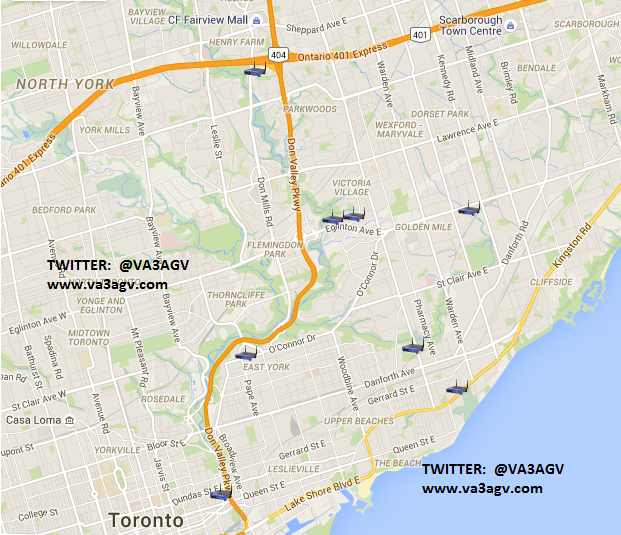
High Speed Multi-Media MESH
High Speed Multi-Media MESH (www.hsmm-mesh.org) is a project that originated with the ARRL and took advantage of existing open software architecture on the WRT54Gx models of Linksys routers.
These routers can be found for as little as $30 (there is a hardware compatability list that should be referenced) and the firmware installation is painless with an easy to follow tutorial that lives on the main site.
In short, the firmware is based on "open-WRT" and has had a "MESH" layer added to it that gives the "magic" that makes it work. Except for changing the Node name to include your callsign, there is little else to be done ...the moment any of these "modified" routers come within range, they will automatically connect to each other.
So, that doesn't sound much different than a regular wireless network ....but it is!!
What sets a Mesh aside is the auto-traffic routing that it performs. The routers automatically take the most effective path to its destination and should any router fail, the mesh survives as it re-directs to the nodes still online. So, in the end, the more stations in range the better!!
These same routers have removeable antennas with RP-TNC connections that allow for higher gain or directional antennas to be used! So the creativity can pour forth into the metal wands we stick in to the air.
Broadband-Hamnet (tm) Mesh Node
A quick demonstration of my Broadband Hamnet (tm) outdoor mesh node setup. This video will show you how I chose to setup my mesh node for severe weather installations.
HSMM Pi Tour
HSMM Pi Tour
A tour of the HSMM-Pi web interface. The HSMM-Pi project transforms a Raspberry Pi into a High-Speed Multimedia (HSMM) wireless mesh node. The web interface of HSMM-Pi greatly simplifies the process of creating the most common types of mesh nodes.
HSMM-Pi Project:
https://github.com/urlgrey/hsmm-pi
A tour of the HSMM-Pi web interface. The HSMM-Pi project transforms a Raspberry Pi into a High-Speed Multimedia (HSMM) wireless mesh node. The web interface of HSMM-Pi greatly simplifies the process of creating the most common types of mesh nodes.
HSMM-Pi Project:
https://github.com/urlgrey/hsmm-pi
Broadband Hamnet (TM) Node (VA3RRZ-99) on tower
This is a video of the installation of my Broadband Hamnet (TM) mesh node on my 64' tower. At the top, are two antennas. One is directional, parabolic grill antenna with a 24dBi gain. The second is an omnidirectional antenna with a 12dBi gain. This node is now live.
Broadband-Hamnet MESH network working with Asterisk
Running a Broadband-Hamnet ( BBHN ) MESH network at home, I have connected a Cisco SPA525G SIP enabled VoIP phone to a Raspberry Pi running the RasPBX Asterisk software. Then, using a WiFi hotspot connected to the MESH network, I am able to connect my Android Nexus 5 phone and make a VoIP call to it. This project is designed to help the broadband-hamnet community in creating solutions for emergency and disaster preparedness, and separate ham networks.
Broadband Hamnet from HSMM-Mesh - Install broadband hamnet Ubiquiti
Install broadband hamnet firmware 3.0.0 on Ubiquiti Nanostation M2
Broadband hamnet flash and startup, flashing a Ubiquiti Nanostation M2 with 3.0.0 code.
Check out my new Kindle ebook on amazon, here:
http://smile.amazon.com/Mesh-Networki...
1. download the code for your ubiquiti unit from here:
http://www.broadband-hamnet.org/softw...
2. set your computer static IP to 192.168.1.22, gateway 192.168.1.20, mask 255.255.255.1, DNS 192.168.1.20
Broadband Hamnet from HSMM-Mesh node is up and running
Broadband Hamnet from HSMM-Mesh
Now what? - Some ideas on what to do AFTER your node is up and running.
[After
answering many of the same questions of newbies in email, I put this
together to give a few folks an idea of what's in store...]
If you are
like me, you found out about this mesh stuff and thought this might be
an interesting tool... You saw possibilities. You thought, yeah, this
is what TCP/IP packet SHOULD have been!
If you are
like me, you hunted down some gear, you figured out which software to
download, you leaned how to get inside the box and re-flash the firmware
– and voila! You are almost there! You click update and cross your
fingers...
MESH how do you deploy and finance in a city?
We have started to create a mesh in our city. Some significant
issues. The terrain (especially with tall buildings) means we need lots
of nodes for infrastructure. I am getting a strong 'have you build it
yet' from the local ham population.
How have other areas financed (or convinced the local hams) to be involved (AKA donate kit) ?
Unlike a repeater which only needs 2 or 3 guys to do EVERYTHING, a mesh needs to be a community project. What if the community is not ready? Do we cancel and use the existing kit for other purposes or keep pushing slowwwwwly forward? Even when we setup the packet nodes & PBBS 25 years ago, it was only a few hams that really got involved.
Any words of wisdom are welcomed. Even doom and gloom are welcomed. Will the mesh catch on with the general ham population or is this going to be the pet project of a select few?
Broadband Hamnet from HSMM-Mesh - Setup Password
Broadband Hamnet from HSMM-Mesh - Setup Password, I forgot the Setup Password how to...
The password: hsmm, should all be lowercase.
hmss or hsmm?
Take a look at the posts here: http://www.broadband-hamnet.org/hsmm-mesh-forums/view-postlist/forum-3-firmware/topic-533-safe-mode-change-user-name.html You will diverge slightly in the failsafe directions (my posts there are still relevant to your case).
Hopefully you will find some useful information here.
Discussion
https://groups.io/g/AREDN
https://aredn.blogspot.com/
,
Asterisk and Broadband Hamnet finally working together! VOIP mesh
I have been running a Mesh network based on HSMM mesh for a long time, and a Raspberry Pi Asterisk VOIP phone system also. I recently tried to get them working together and didn't have any luck with the firewall changes that I thought were needed.
I am a long time Linux guy and use Iptables and thought I really unstood what was needed, however, I could never get the VOIP to traverse the mesh nodes.
I pulled out my Grandstream 701's after upgrading to 1.0.0 version of Mesh, and low and behold it works!! Yay! Here is a couple key items that are important to get right, port forwarding and using a name instead of an IP address.
WRT54, 5 node mesh. Grandstream HT701 and 2 plain old telephones, along with Asterisk latest version, running on Raspberry Pi as a server. As a bonus, the server is running on my mobile mesh node mounted in my car, powered by johnson power pole and USB.
video:
broadband-hamnet First Setup and First Mobile Test - AF5DN
How many MESH nodes in local network
I am wonder haw many nodes you have in local networks ? and how many hops ?
I am asking about this because we have see that in Mesh network bandwidth changing with follwoing
1 hop - 50% of the possible bandwidth.
2 hops - 25% of the possible bandwidth.
3 hops - <10% of the possible bandwidth.
4 or more hops - it stabilizes at 7% of the available bandwidth.
How to solve problem bandwidth with many nodes in local network ?
Subscribe to:
Posts (Atom)


